
Porsche Mission S: The Porsche Above the 911
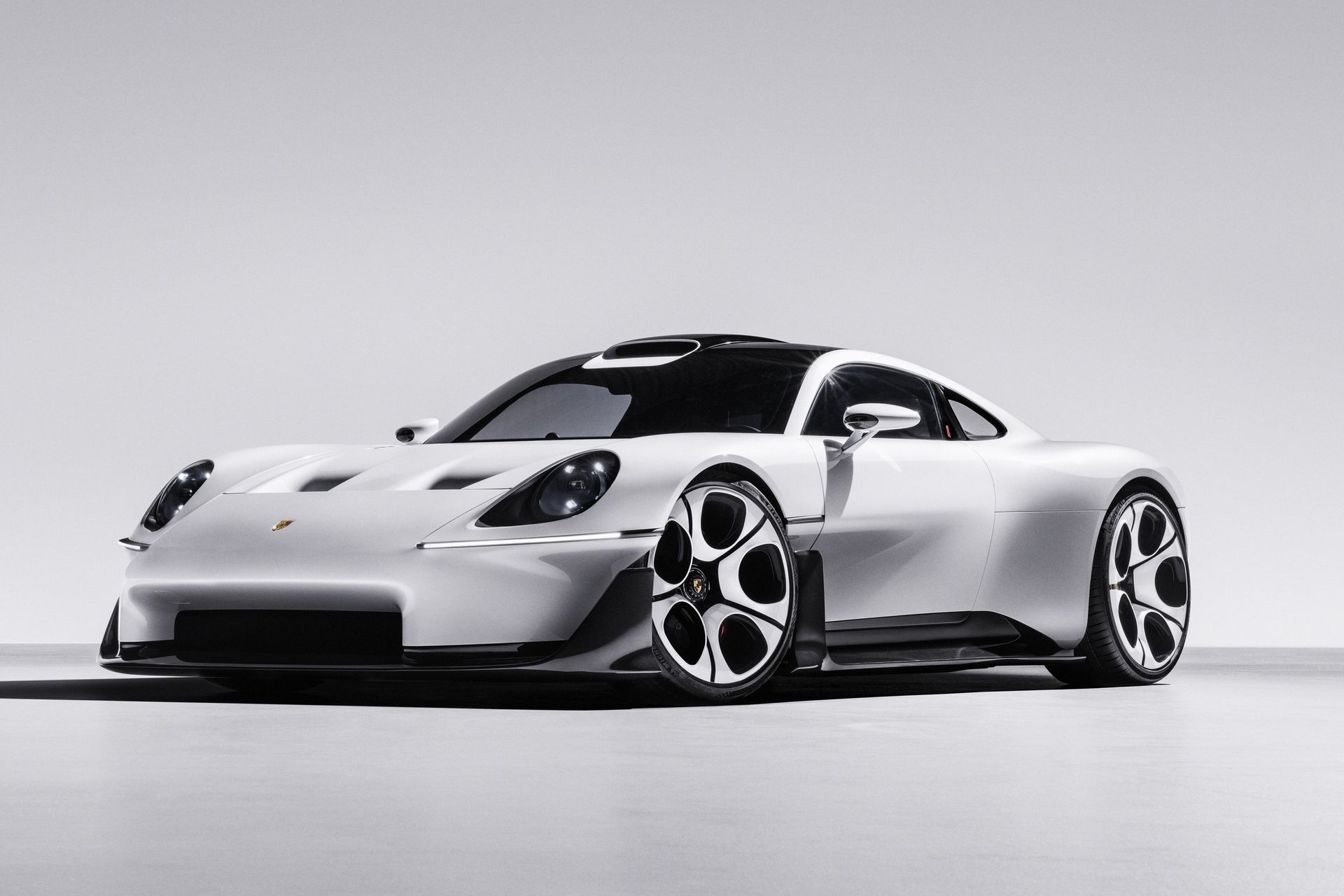
When Porsche uses the word "Mission", it's usually showing us the future. The Mission E became the Taycan. The Mission X imagined an all-electric hypercar in 2023.
Now there's the Mission S, and it could be the most important of them all.
Revealed on Thursday 15 October, the Mission S is a vision model that previews an all-new mid-engined super sports car platform. It will sit above the 911 at the very top of Porsche's range, and it gives us a first look at how Porsche's cars will look and feel in the years ahead.
"A Porsche must be recognisable as a Porsche at first glance," says Dr Michael Leiters, Chairman of the Executive Board of Porsche AG. "The Mission S provides a glimpse of the ideas and design features that will shape Porsche in the coming years."
Not a One-Off
Porsche's flagship cars have always been rare. Only 292 examples of the 959 were built in series production between 1987 and 1988. The Carrera GT followed, with 1,270 hand-built in Leipzig between 2003 and 2006.
Then came the 918 Spyder, limited to 918 cars. The last one left the line in June 2015.
The Mission S breaks that pattern. Leiters describes it as a mid-engined platform positioned above the 911, "not as a one-off hypercar, but as a permanent and versatile addition to our customer offering."
For the first time, Porsche is planning a super sports car that stays in the range rather than selling out as a numbered series. Porsche also talks about a "model line" above the 911, which suggests more than one car will come from it.
A Reveal 73 Years in the Making
Porsche chose the location with care. The Mission S made its world premiere on a pier in Queens, New York, looking across to the Manhattan skyline.
It's the same pier where the first pictures of the 550 Spyder were taken in 1953. Porsche calls the 550 Spyder its first super sports car, and says it laid an important foundation for the brand's success in America.
73 years later, its successor stood in the very same spot.
Inspired by Porsche Icons
Look closely and the Mission S is full of nods to Porsche's greatest cars.
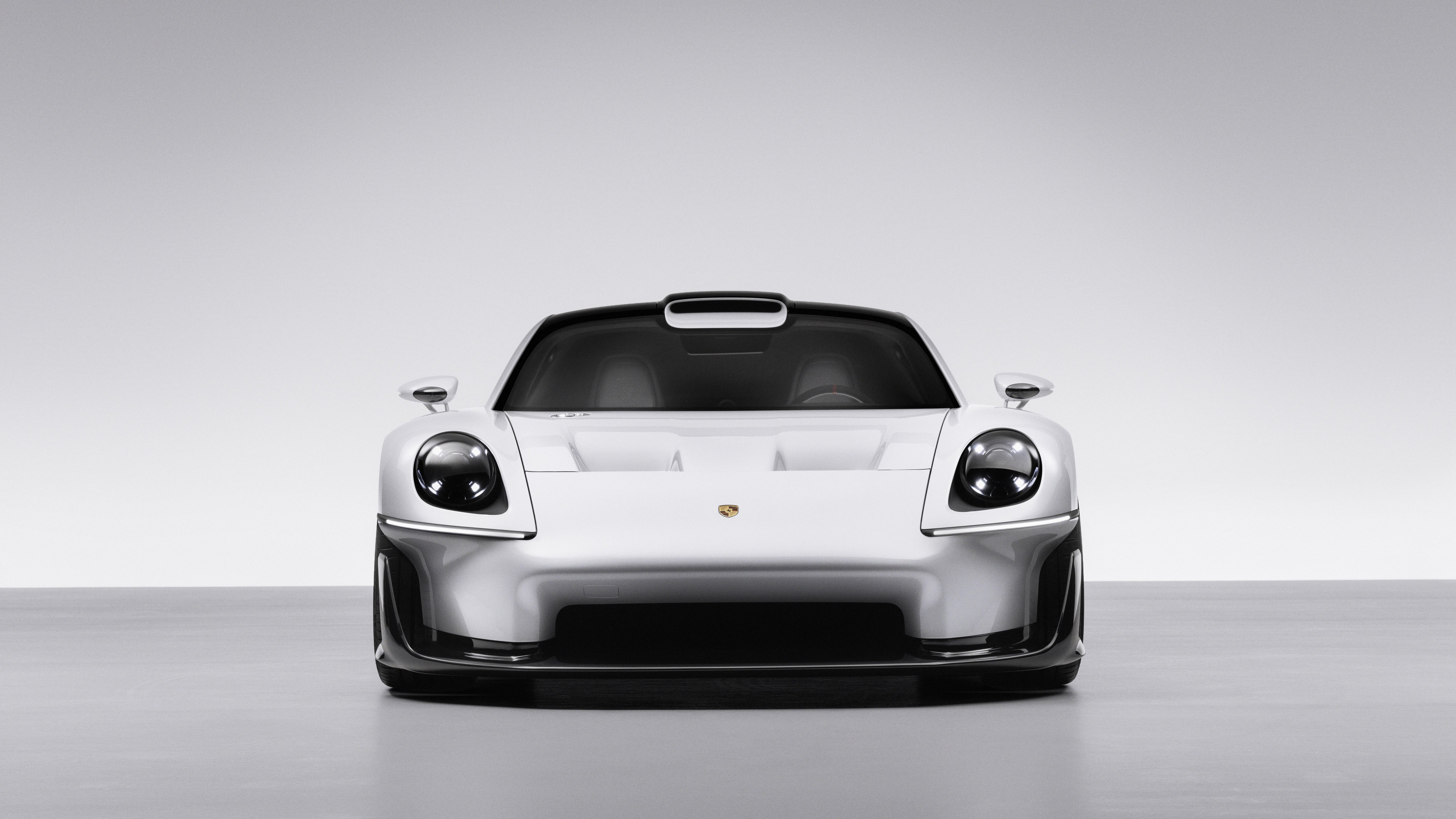
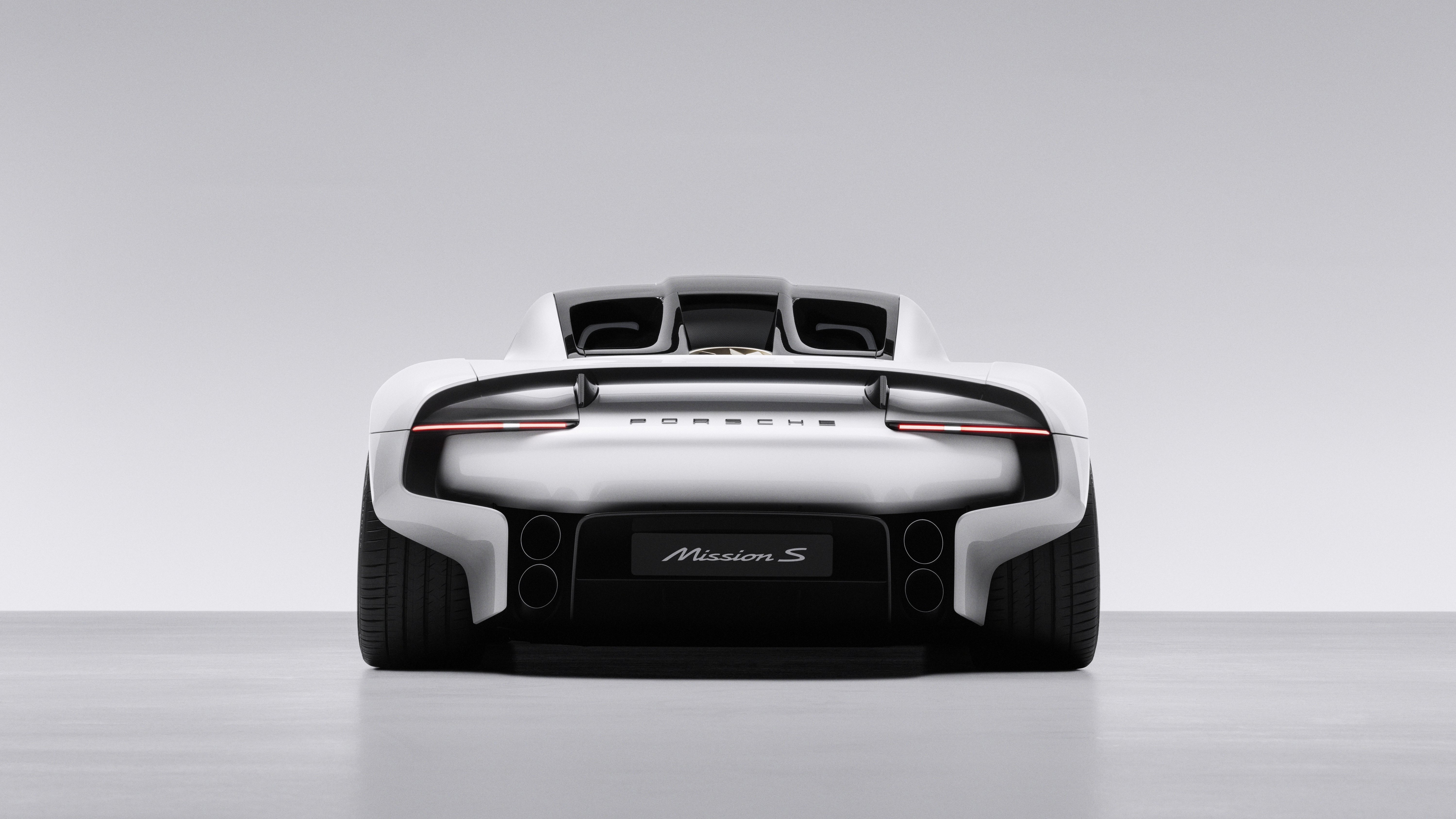
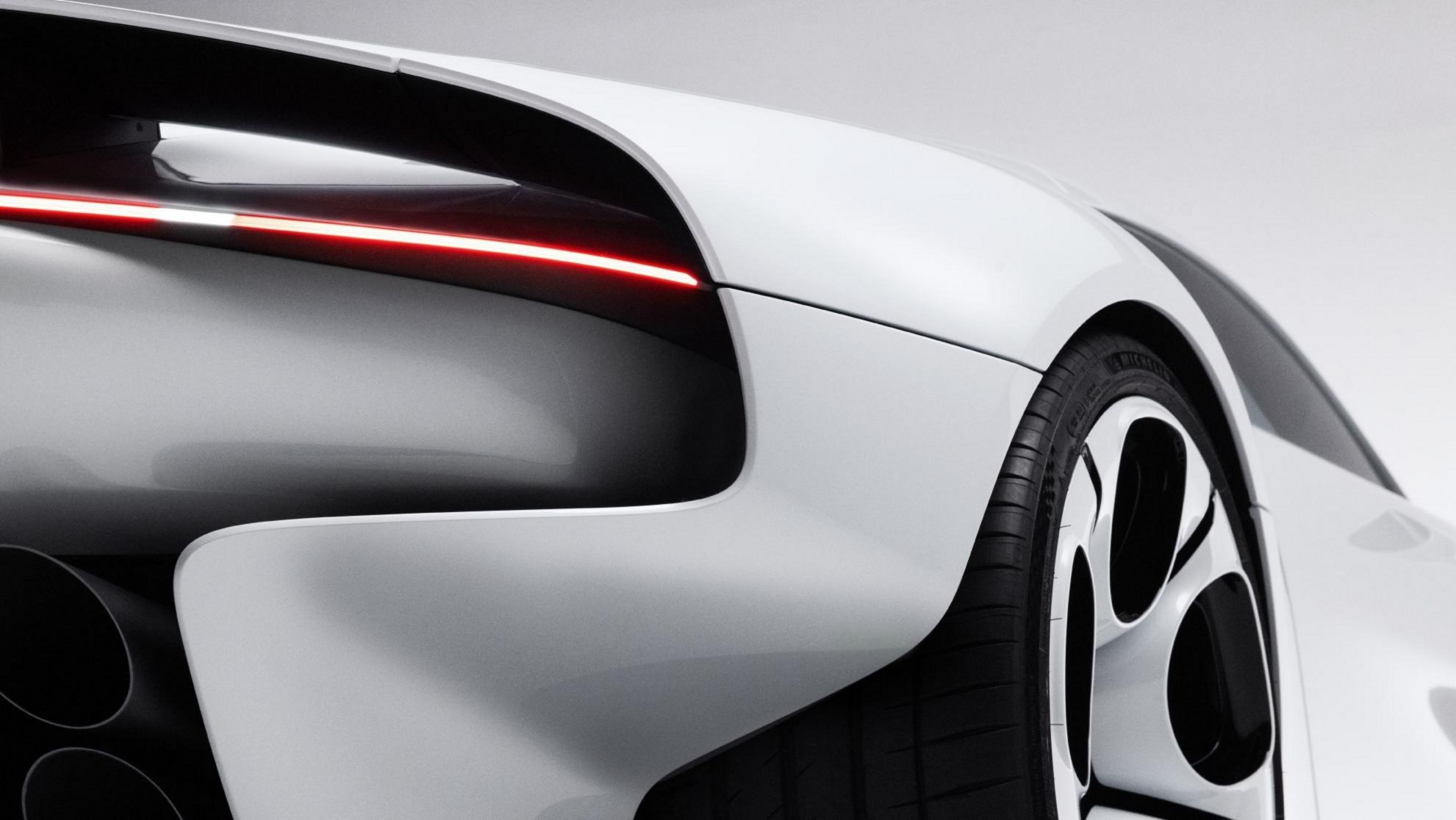
The round headlights and raised "torpedo" front wings come from the 911. The flat front end is taken from the GT1, and so is the "car-in-car" design at the rear. The shut lines run into the lights in a nod to the G-model 911, while the roofline flowing under the rear wing pays tribute to the 959.
There are clever technical touches too. A cooling fan above the engine recalls the radiator fan of the legendary 917, and the rear wing is fully active. The wheels are a new take on the 928's famous "dial" design, reworked to save weight.
Porsche's design chief, Tobias Sühlmann, sums up the shape simply. "Every child can draw that one line, and everybody will know what kind of car it is," he told Auto Express, talking about the classic Porsche roofline.
The colours look to Porsche's racing past. The show car wears Firn White Metallic, Light Red Metallic and Black Chrome, with Special Black inside, all developed to reinterpret the classic Porsche Motorsport colours.
A Cabin Built Around the Driver
Inside, Porsche has gone back to basics. The cabin takes its cue from the 550 Spyder and 356, with two lines running through the dashboard and doors to give the feeling of sitting deep within the car.
Behind the steering wheel sit five round dials, a true Porsche signature. At their centre is a rev counter with a real analogue needle, which reads to 8,000rpm in the show car.
The dials change with the drive mode. In the sportier settings the rev counter moves closer to the driver, and the other dials rearrange around it.
The key sits to the left of the steering wheel, as is customary at Porsche. Push-pull switches on the dashboard give direct access to comfort and driving functions, and there's a reimagined Sport Chrono stopwatch and seatbelt buckles built into the centre panel.
No Centre Screen
Perhaps the boldest decision is what Porsche has left out. There's no fixed centre touchscreen and no passenger display.
Instead, a retractable, MagSafe-compatible holder takes your own phone, which can act as the navigation or information screen when you want it. A simplified My Porsche app gives access to the car's functions, and even lets owners choose historically inspired designs for the dials.
At a time when most new cars are dominated by screens, it's a refreshing change.
Petrol, Hybrid or Both
Porsche hasn't yet revealed what powers the Mission S. There's no word on the engine, power, performance, price or launch date.
What we do know is that it won't be fully electric. "We have the flexibility in that platform to do pure ICE, hybrid and also plug-in hybrid," Leiters told Auto Express. "There won't be a BEV on that platform: there is no demand."
In other words, expect a combustion engine on its own or with hybrid help, but never a battery-only car.
There's more good news for drivers. Road & Track and Edmunds both report that the platform has room for a manual gearbox as well as an automatic. The show car has a gear lever in the centre console and paddles behind the wheel, so we'll have to wait and see.
A Super Sports Car Here to Stay
The Mission S is part of Porsche's new "Sportwagenschmiede '35" strategy, its plan through to 2035. "This vision model illustrates a fundamental strategic direction that we will soon be translating into our future product portfolio," says Sühlmann.
The 959, Carrera GT and 918 Spyder each defined their era. The Mission S has a bigger job: to set the tone for every Porsche that follows.
A new flagship. A new look. And for the first time, not a limited run.