
Ferrari SF90 XX: The First Road-Legal XX Ferrari
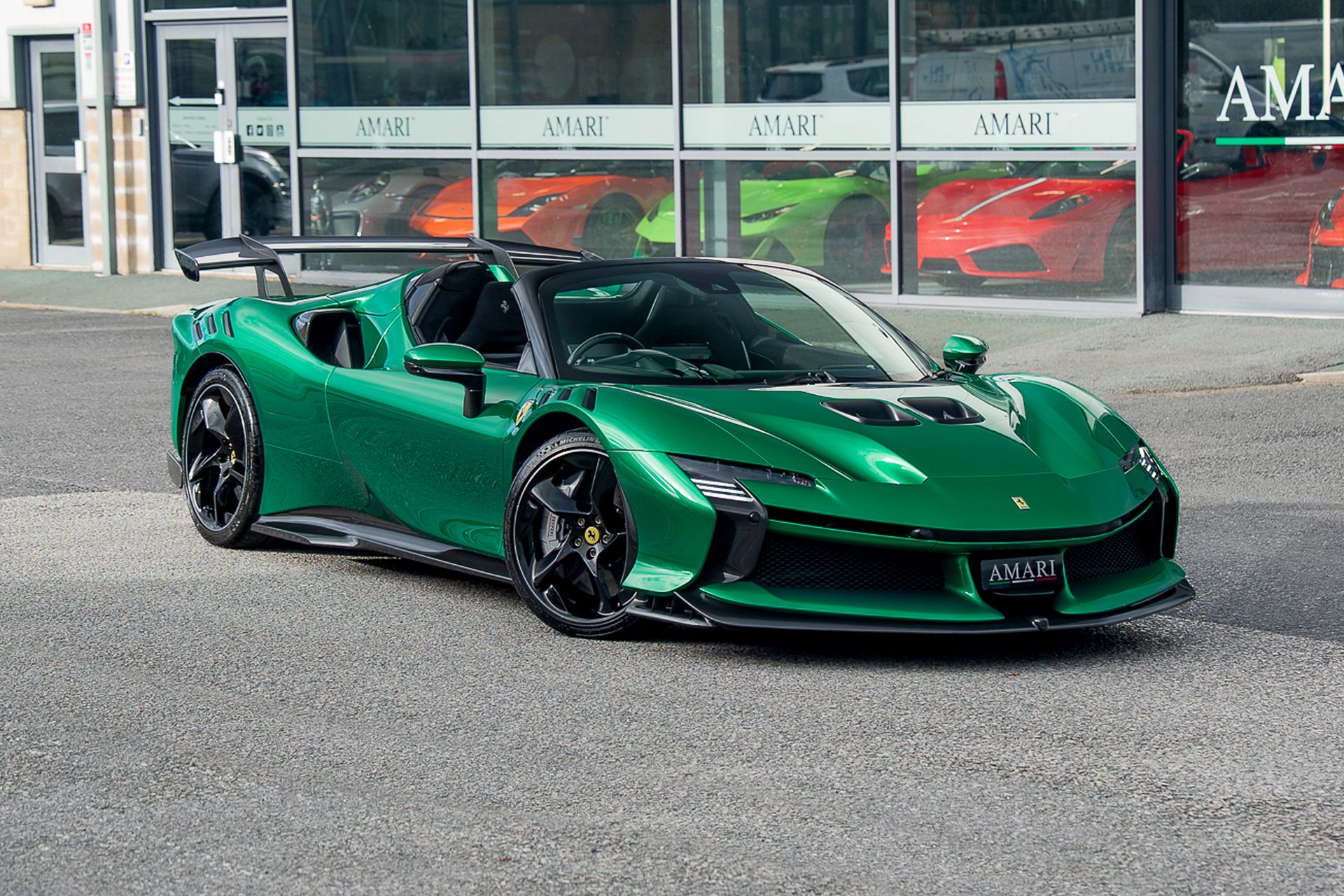
For almost two decades, the letters XX meant one thing at Ferrari: extreme, track-only cars built for a small circle of expert client drivers and never approved for the road. The SF90 XX changed that.
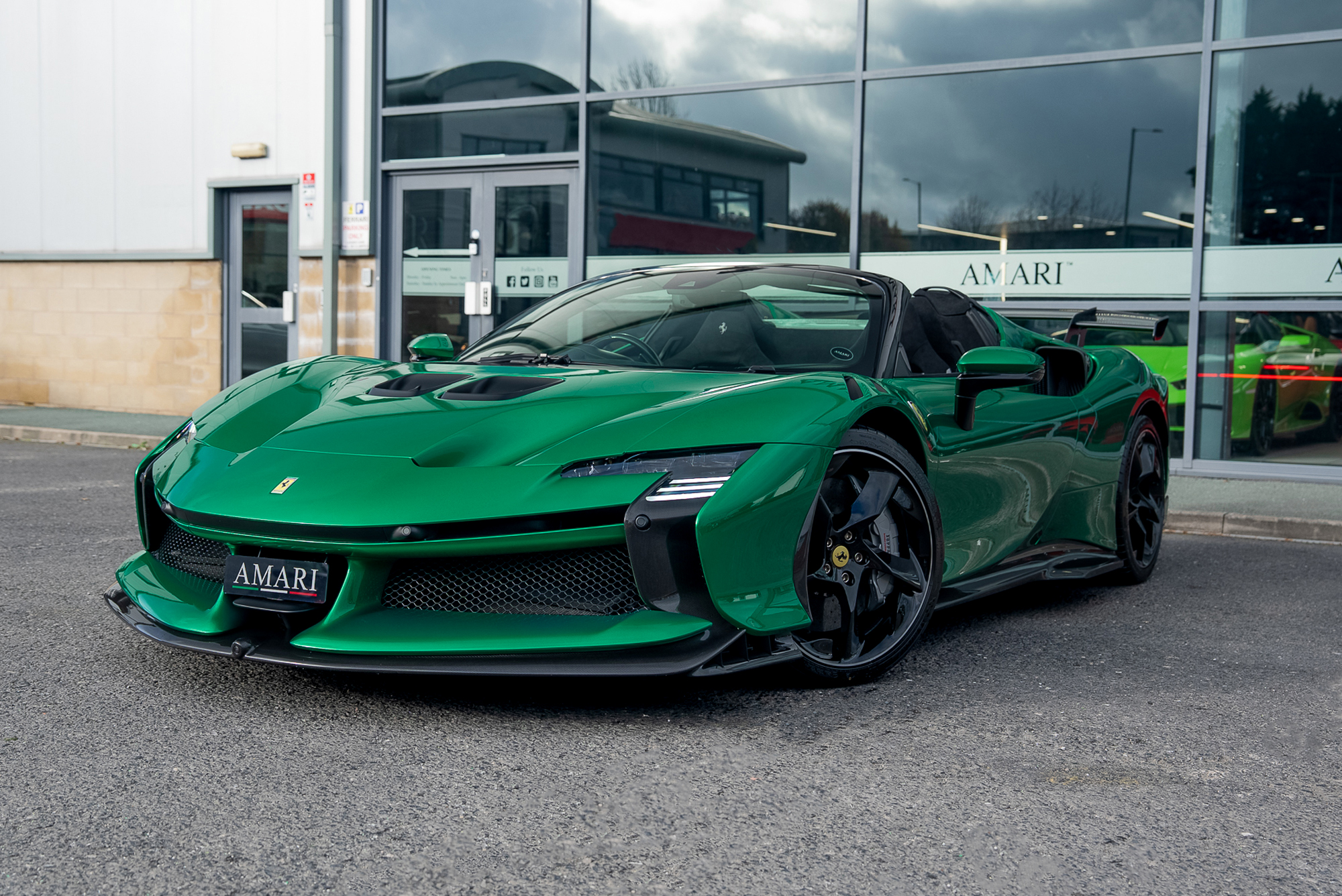
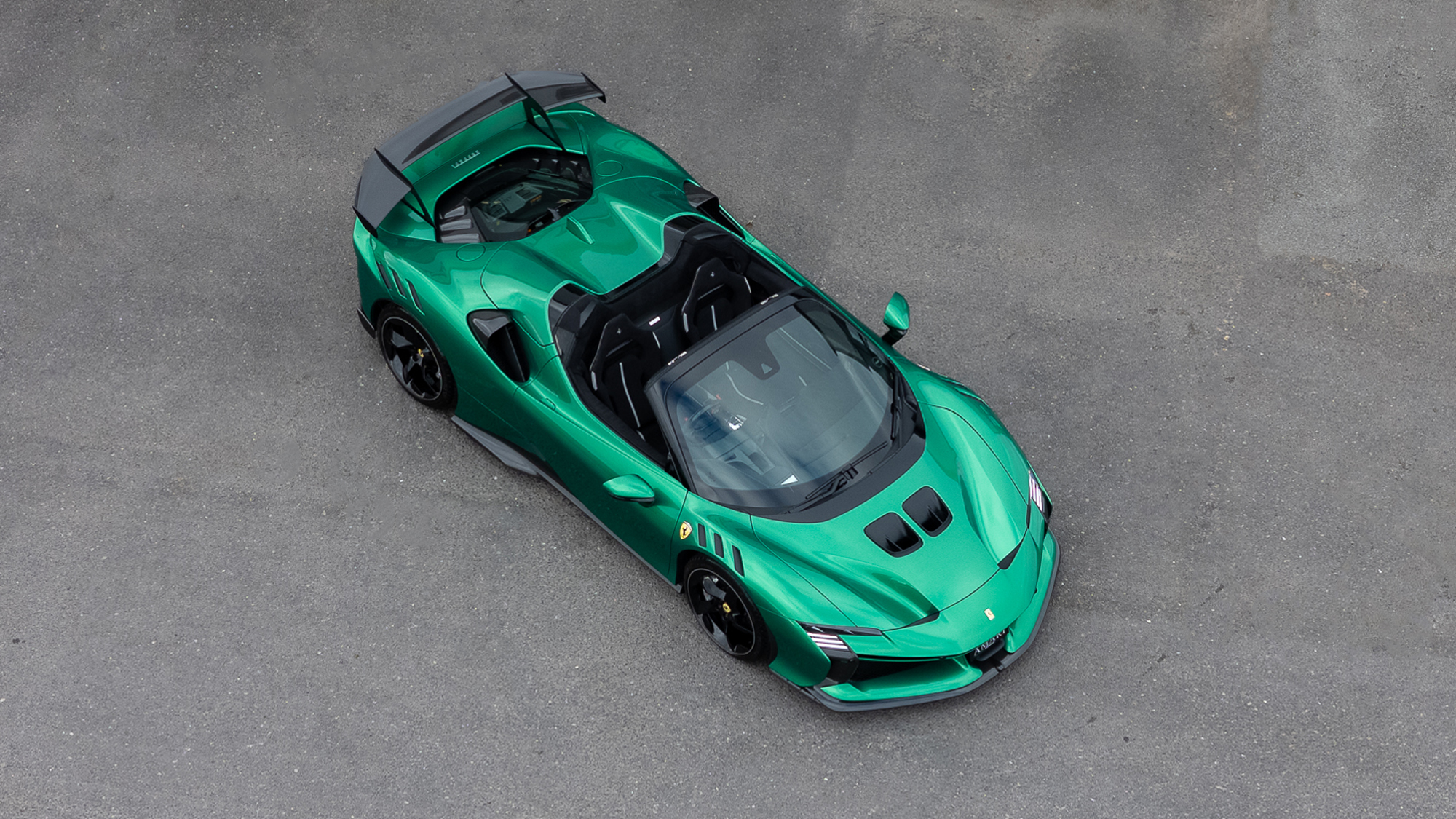
Unveiled in Maranello in June 2023 as a coupé, the SF90 XX Stradale, and a convertible, the SF90 XX Spider, it is the first car from Ferrari's XX Programme that can be registered and driven on the public road.
Where the XX name comes from
Ferrari launched its XX Programme in 2005 with the FXX, a track-only car based on the Enzo. The 599XX and the LaFerrari-based FXX K followed. None of them could be registered for the road; owners drove them at private track events run by Ferrari's Corse Clienti department.
Alongside XX, Ferrari has spent around 20 years building Special Series cars such as the 488 Pista and 812 Competizione, the sharpest road-going versions of its models. The SF90 XX brings the two lines together for the first time.
Power
The starting point was the SF90 Stradale, Ferrari's plug-in hybrid flagship. Its 4.0-litre twin-turbo V8 now produces 786bhp at 7,900rpm and 593lb ft at 6,250rpm, thanks to polished intake and exhaust ducts, new pistons and a higher compression ratio. Removing the secondary air system also took 3.5kg out of the engine.
The V8 works with three electric motors, one between the engine and gearbox and two on the front axle, which add up to 230bhp. Combined output is 1,016bhp, 30bhp more than the standard SF90 Stradale and, at launch, the most powerful road car Ferrari had built.
A new extra boost function, available only in the car's Qualifying mode, releases a burst of extra electric power lasting around two seconds as the car exits a corner. Ferrari says this alone takes a quarter of a second off a lap of its Fiorano test track.
Ferrari quotes 0-62mph in 2.3 seconds and 0-124mph in 6.5 seconds. It is still a plug-in hybrid, too: the 7.9kWh battery gives around 15 miles of electric-only driving at up to 84mph, with the front wheels doing the work.
Aerodynamics
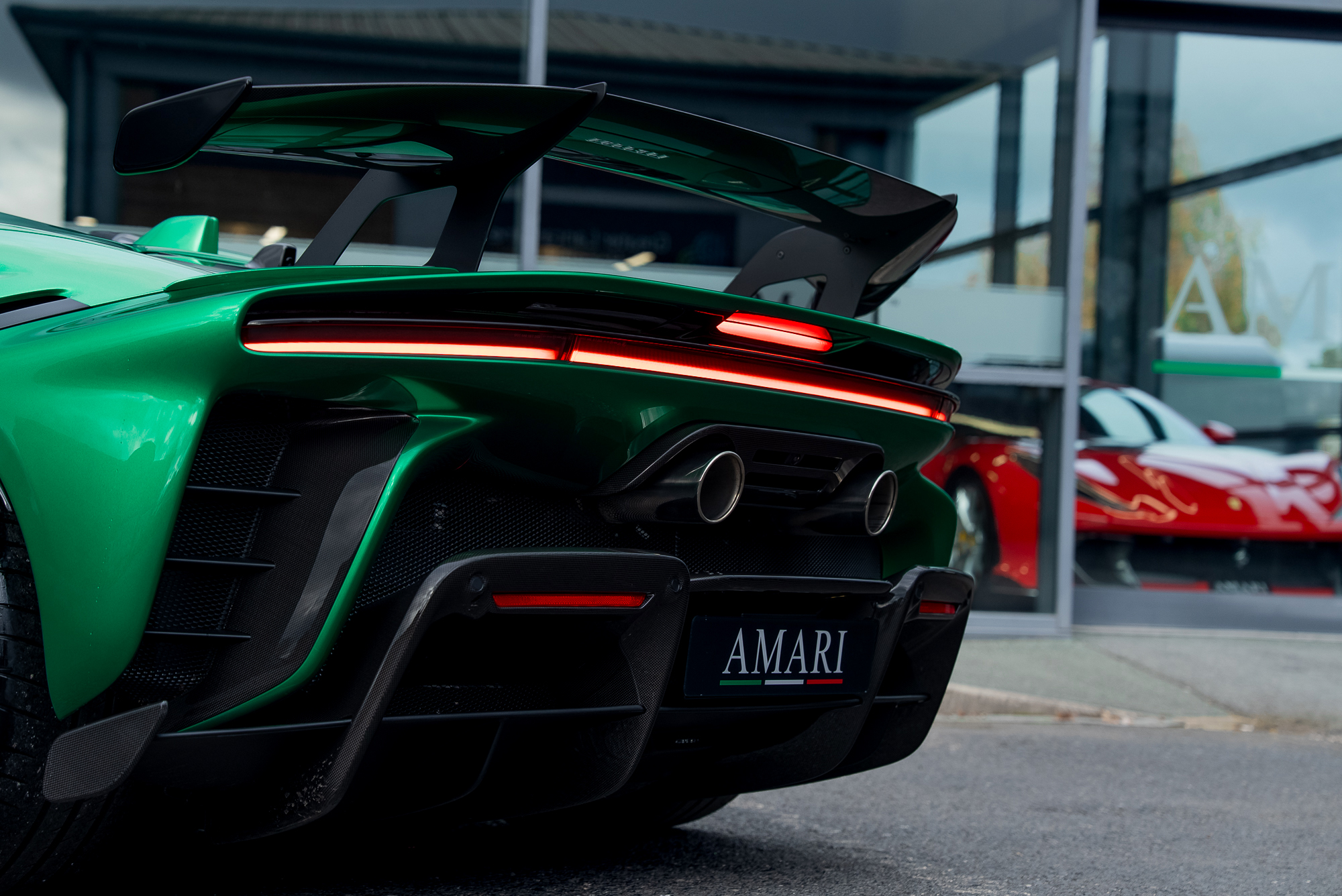
The most visible change is the fixed rear wing, the first on a road-going Ferrari since the F50 of 1995. Developed from Ferrari's work on the XX track cars, it works with a larger front splitter, front S-ducts, a reworked underbody and a revised rear diffuser.
Together they produce 530kg of downforce at 155mph, double that of the SF90 Stradale. Ferrari says this gives the SF90 XX the most efficient aerodynamics of any road car in its history, comparable only to the LaFerrari. The extra downforce brings top speed down slightly, to 199mph against the standard car's 211mph.
Design
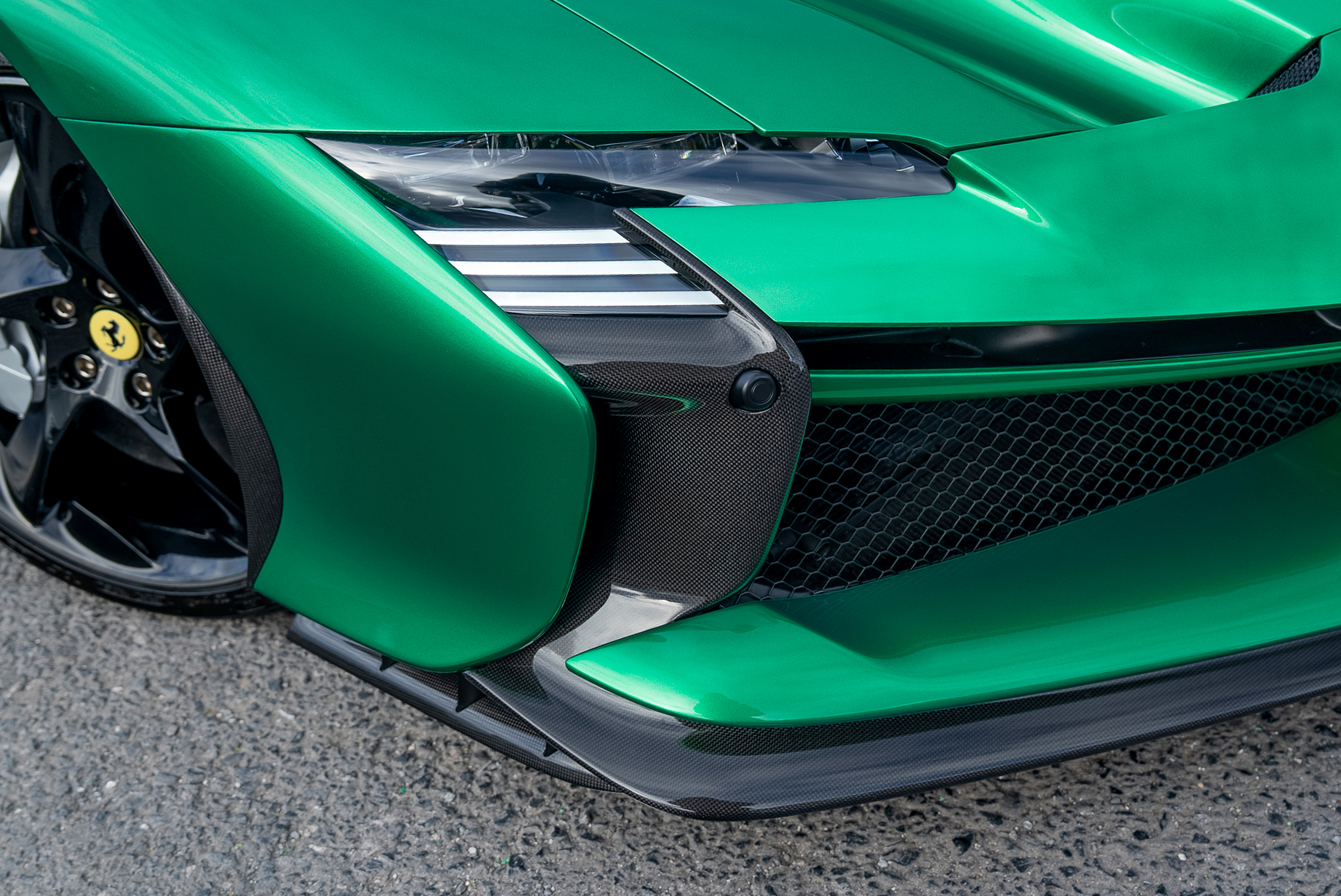
Shaped by the Ferrari Styling Centre under Flavio Manzoni, the SF90 XX has a longer, racing-car style tail and a single full-width light bar in place of the SF90's twin tail lights. Triple-gill vents on the front and rear wings nod to earlier Special Series cars such as the F12tdf.
Inside, the focus is on saving weight: carbon-fibre door panels, technical fabrics, Alcantara and the lightest seats Ferrari has ever fitted to a road car. The Stradale weighs 1,560kg dry with Ferrari's optional lightweight equipment fitted.
The Spider
The SF90 XX Spider shares the coupé's power and aerodynamics, with airflow through the cabin tuned for driving with the roof down. Its retractable hard top opens or closes in 14 seconds at speeds of up to 28mph. On the same basis, the Spider weighs 1,660kg dry and reaches 124mph in 6.7 seconds.
A record at Fiorano
On 16 October 2023, Ferrari's head of development test driving, Raffaele de Simone, lapped Fiorano in the SF90 XX Stradale in 1min 17.309sec. It was a new record for road cars at the circuit, 1.4 seconds quicker than the SF90 Stradale with the Assetto Fiorano package on the same tyres, and the time was independently certified.
Even the SF90's successor, the 849 Testarossa revealed in 2025, falls just short of it. Of Ferrari's published Fiorano times, only the F80 hypercar has gone quicker.
Just 1,398 cars
Ferrari limited production to 799 SF90 XX Stradales and 599 SF90 XX Spiders, priced from €770,000 and €850,000 respectively, and every one was spoken for by the time the car was unveiled. For a badge that once meant track days only, it marks a significant moment in Ferrari's history.